LookLab
Improving fashion wholesale sourcing with AI-driven discovery methods
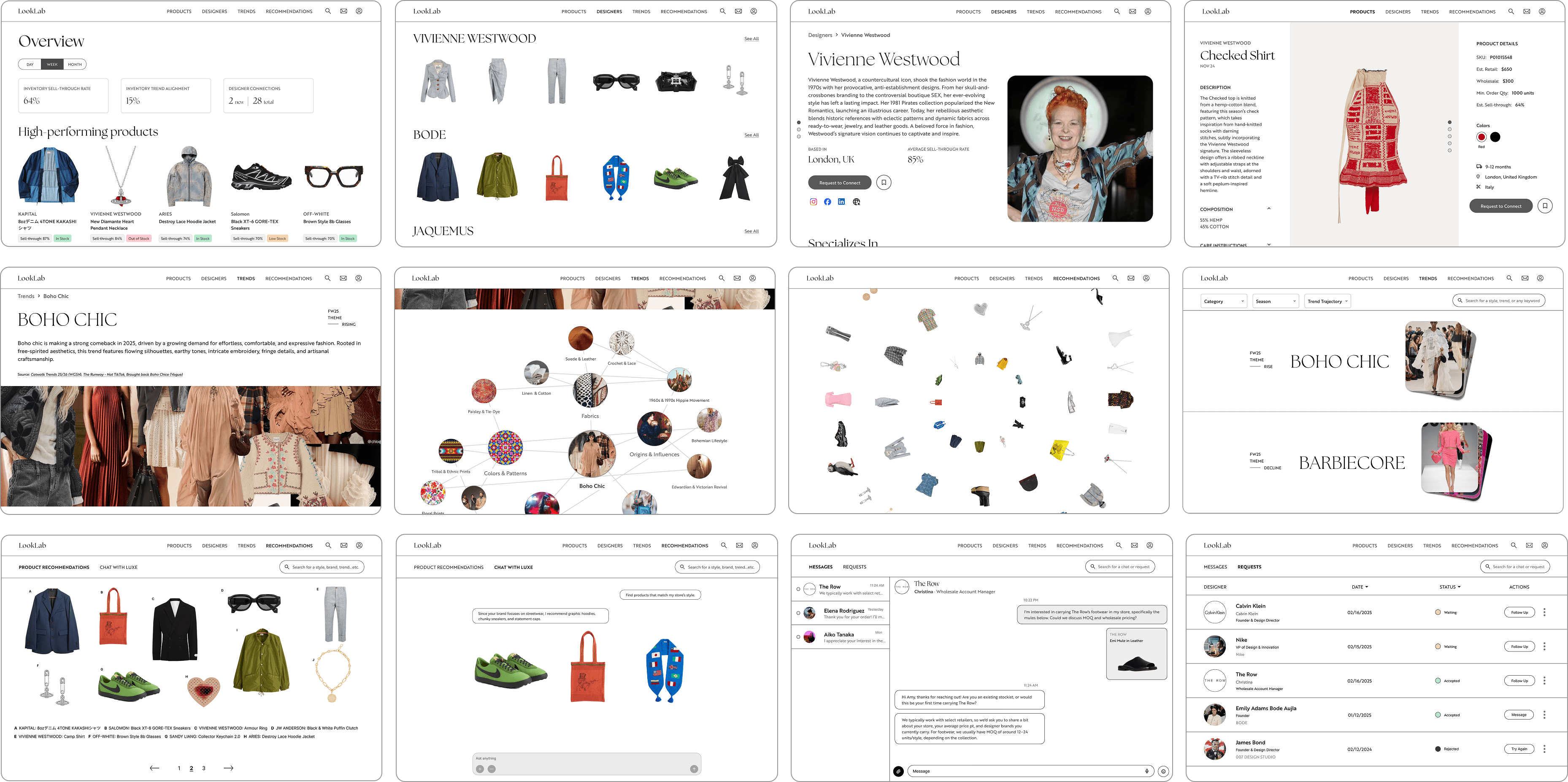
LookLab is a startup seeking to help small retailers discover and source items from emerging designers. In addition, it uses Shopify and store inventory data to generate personalized recommendations and makes projections for what will sell well in their inventory.
Industry
Fashion Retail
B2B Wholesale Sourcing
Outcomes
92% satisfaction rate
On ease of discovery of core features
100% success rate
On finding and connecting with designers, a key KPI for MVP
5 core features
Designed and validated, with phase 2 roadmap defined based on user testing findings
Problem
Challenge
Fashion retailer boutiques struggle to discover wholesale products that align with their existing inventory and brand identity. Traditional wholesale sourcing is fragmented and especially challenging when discovering emerging designers.
Solution
LookLab is a discovery-focused B2B e-commerce platform that connects independent retailers with emerging designers. By integrating Shopify data, the platform provides trend insights and personalized product recommendations to help retailers discover collections aligned with their brand aesthetic.
Constraints
LookLab was pre-product with limited technical resources. The stakeholder priority was discovery—getting retailers and designers onto the platform. Features like AI recommendations and trend analysis were designed aspirationally for future data infrastructure.
Process
From Concept to High-Fidelity Prototype
I led product strategy and client collaboration for a 4-person design team. I conducted 4 of 8 user interviews and 3 of 6 usability tests, designed the information architecture, and held the product vision throughout. The design process was highly collaborative—I contributed to all features through wireframing, strategic CTAs, and refining teammates' concepts through rapid iteration cycles.

User Research
8 User interviews with industry experts
We spoke to 4 small retail owners and 4 domain experts from industry leaders about their wholesale sourcing experiences.
Key needs:
Finding products that align with their store's aesthetic and audience
Confidence in what to stock (and when) to prevent overstock/stockouts
Trend-driven insights to guide decisions
Business insight:
Retailers rely on data across sell-through rates, trends, social signals, seasonality, and regional buying patterns to make confident decisions.
Information Architecture
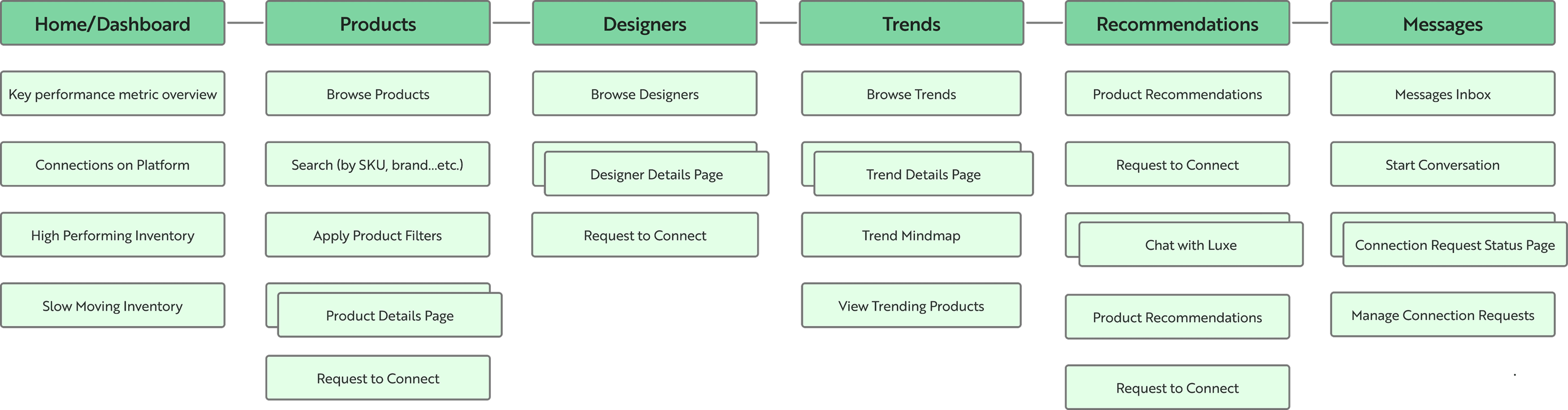
Each team member sketched variations, discussed the logic, and aligned on this final structure:
Key Decisions:
Multi-pathway discovery: Search, trends, and recommendations as three distinct entry points
E-commerce familiarity: Leverage familiar patterns while adding wholesale-specific info (MOQ, wholesale pricing, shipping origin)
Data-first dashboard: Position insights prominently to communicate value, even in early MVP
Core Journey
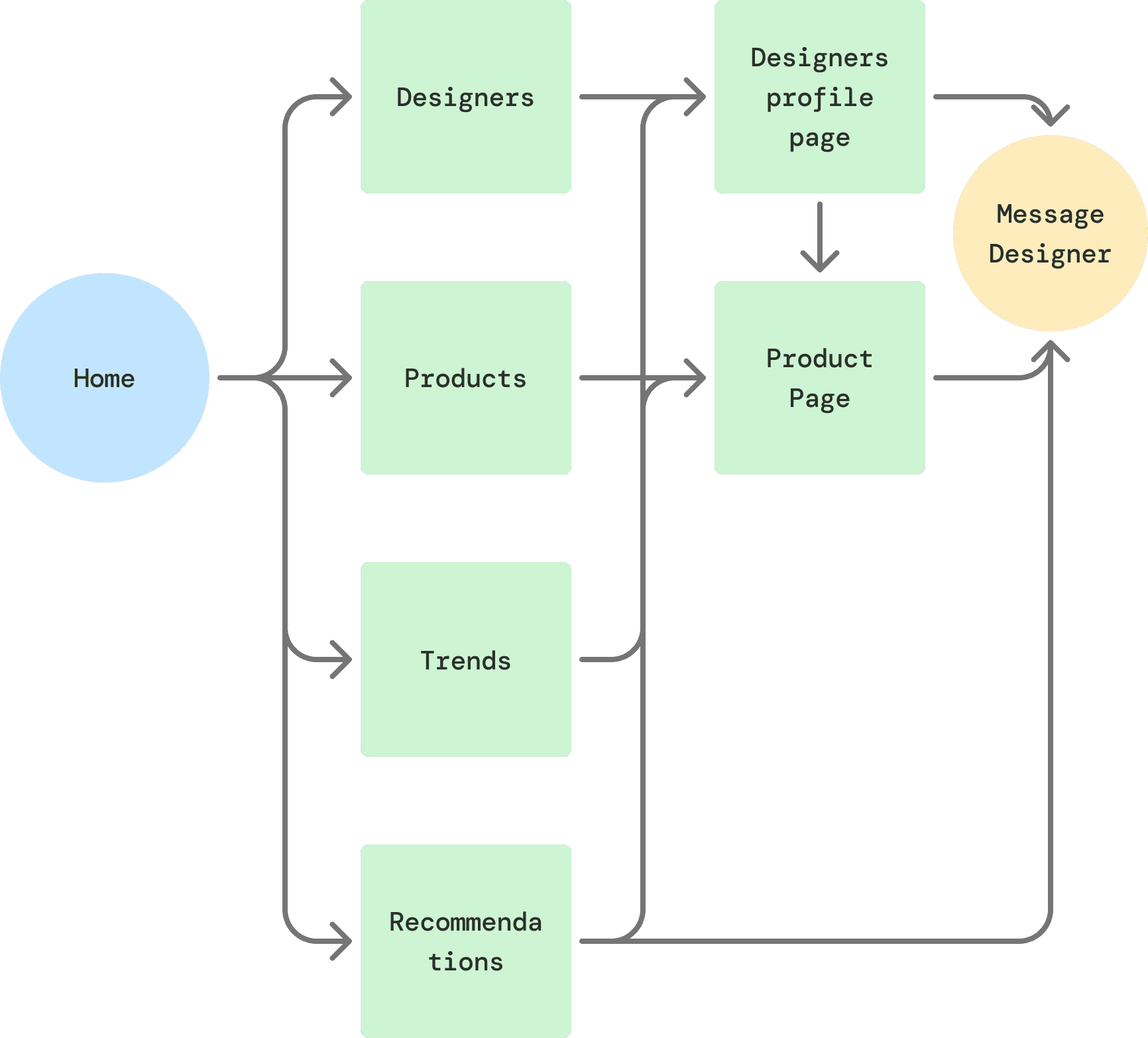
The core journey at this stage was to get retailers in touch with designers so they could start talking business– this user flow shows the many ways users can achieve the core action.
Designs & Iterations
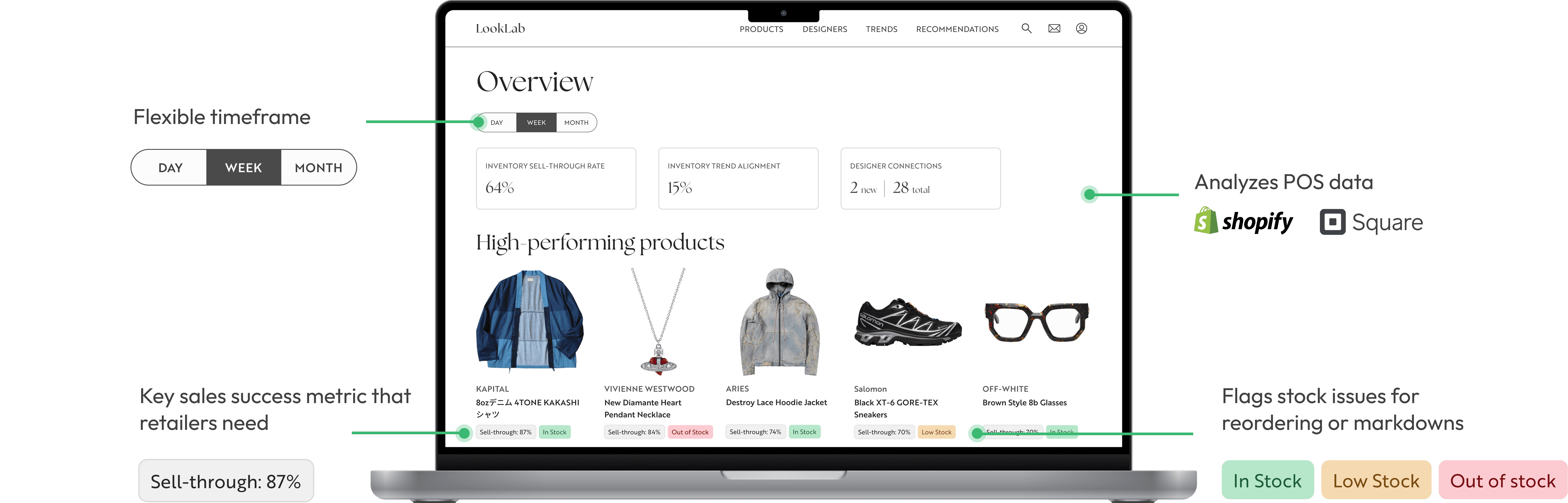
Feature #1: Dashboard with most actionable inventory metrics
Rationale: The goal is to help users quickly decide what to restock and discount. This page would integrate a Shopify API to surface actionable insights at a glance. For now, we included the highest and lowest performing items.
Previous Iterations
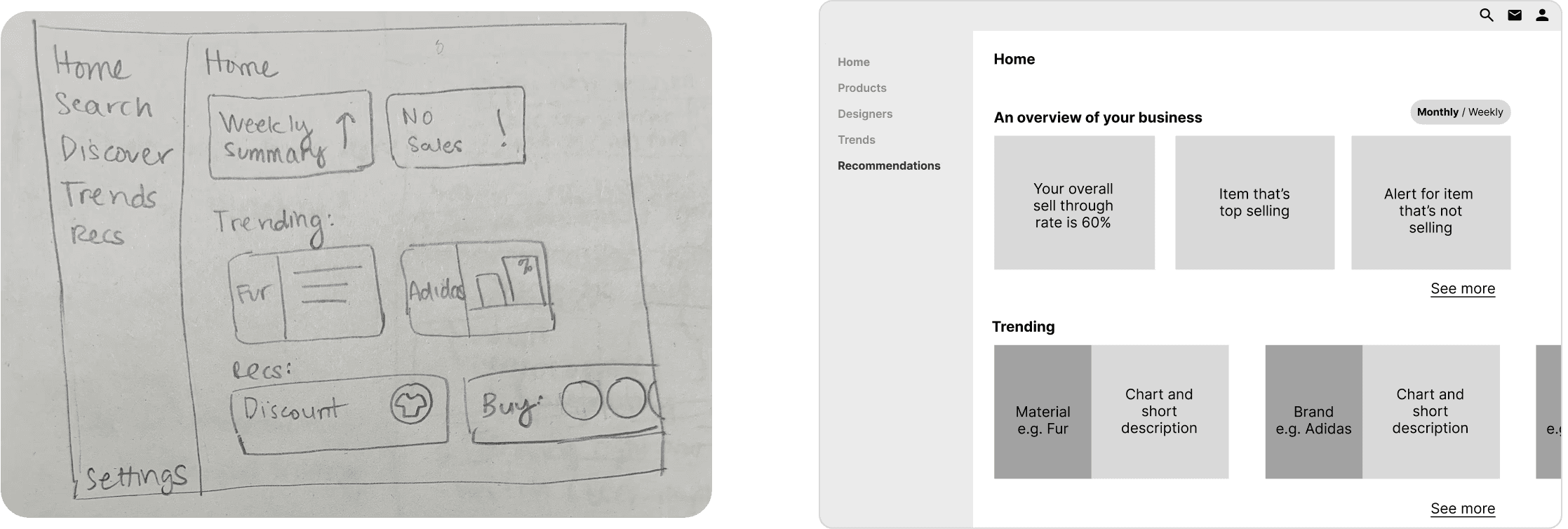
Concerns
Liability: we cannot directly tell users what to discount or buy
Not actionable: trend data isn't as directly actionable as inventory data so we removed it from the homepage
Feature #2: Discover Based on Trend
Rationale: Fashion trends influence retail buying. I wanted to surface actionable, credible ways to discover products by trend, instead of having to sift through thousands of clothing items.

Previous Iterations
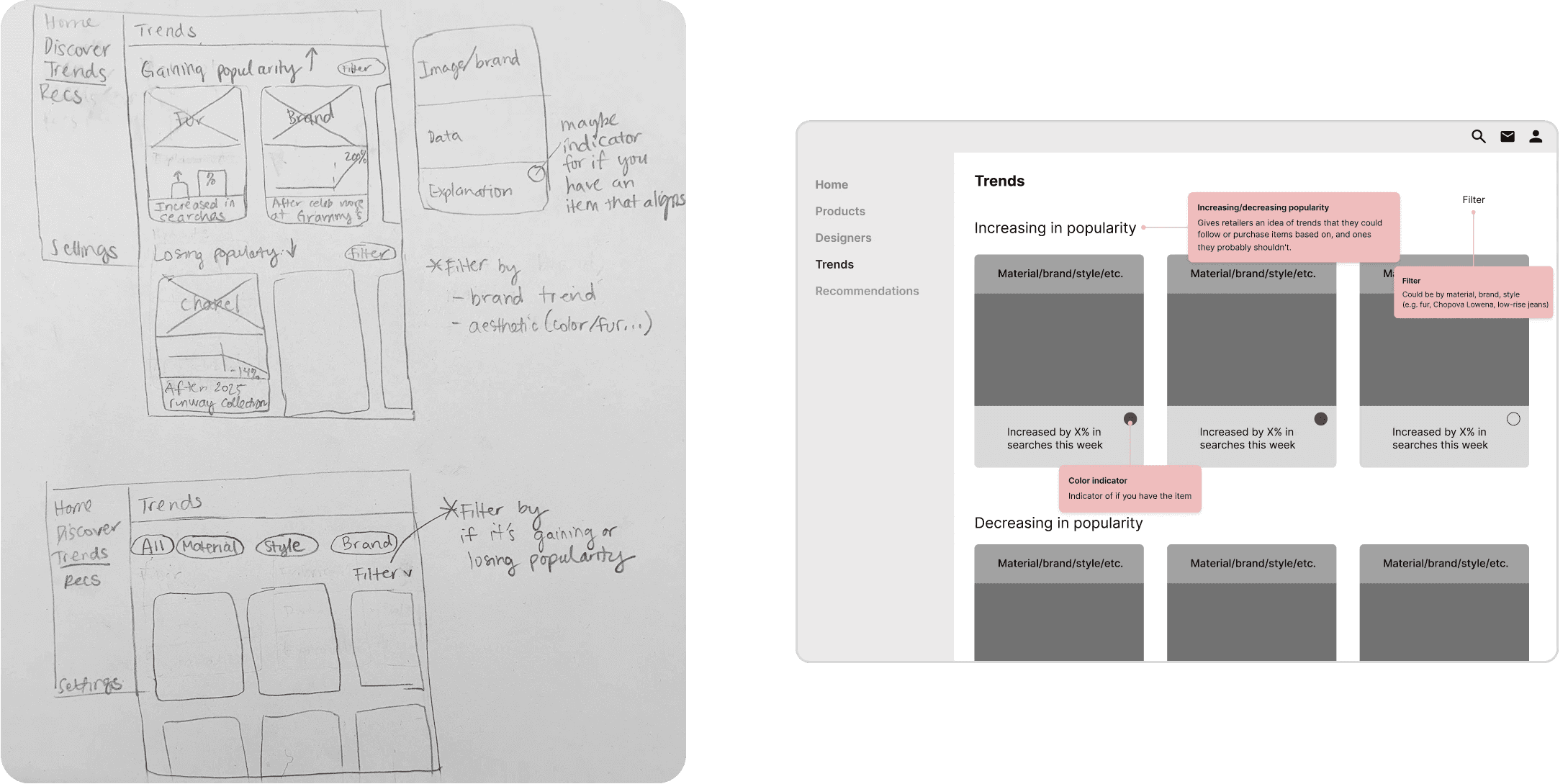
Concerns
Horizontal scrolling isn't optimal use of space
- Limited filtering (only increasing and decreasing)
Feature #3: Smart Recommendations Based on Inventory Data
Rationale: Retailers might have gaps in their collection, or might want to find similar brands to what they already carry, that have a good chance at selling well amongst their existing customers. This feature would suggest products based on their inventory and sales data.
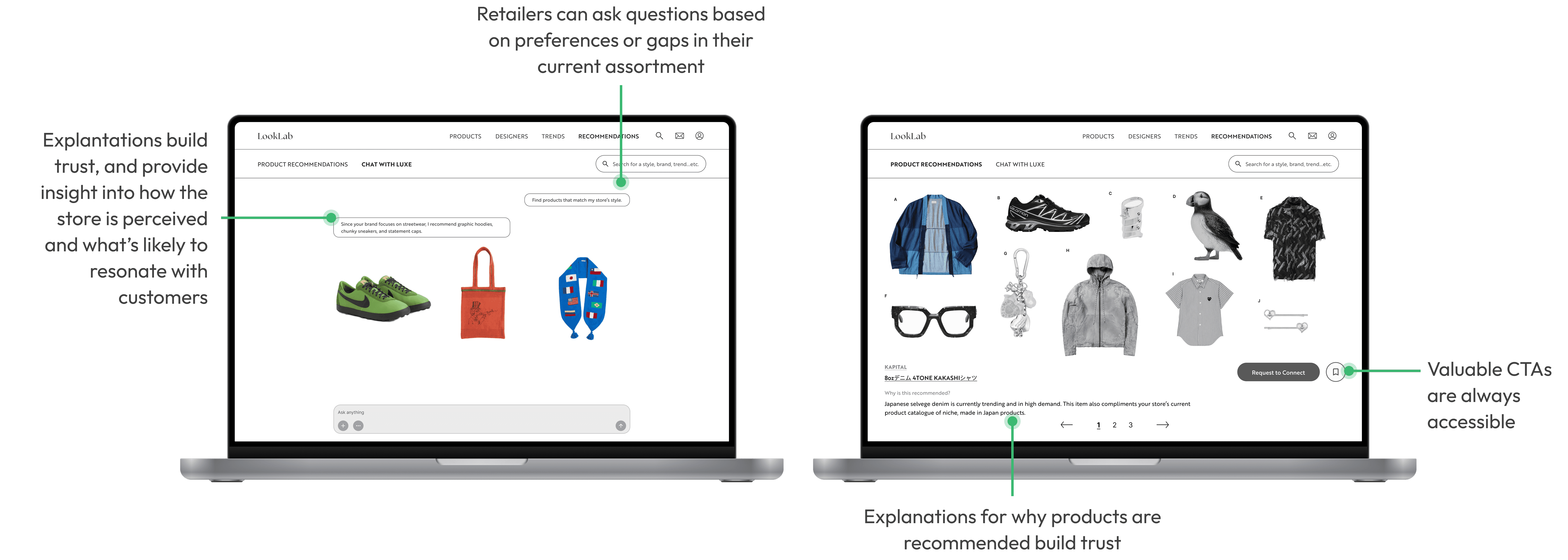
Previous Iterations
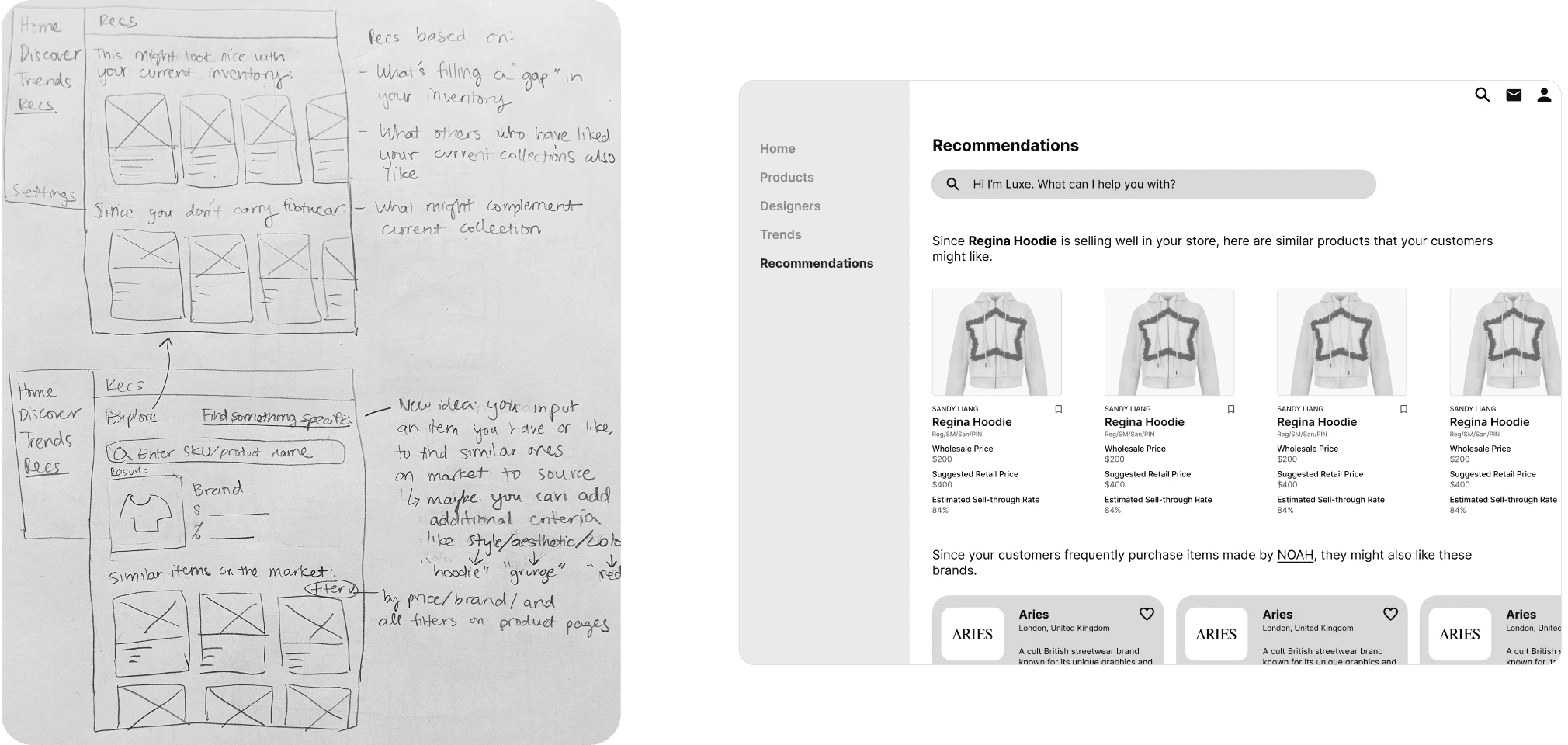
Concerns
Layout is cluttered with too much information upfront
Too much scrolling up and down / left and right
All discovery paths lead to the product page
Feature #4: Product Pages Catering Specifically to Wholesale Buyers
Rationale: Whether retailers explore trends, get recommendations, or browse products directly, they all end up on the product page. I designed the product pages to include everything wholesale buyers need to make a decision—MOQ, lead times, wholesale pricing, and designer contact– removing friction between "I like this" and "let's talk business."

User Testing Summary
What worked well
🤝
Connect with Designers
100% success rate
Retailers were able to contact designers across all pathways. This validated our core MVP goal: getting retailers and designers talking.
💬
Chat Usefulness
4.6/5 ease of discovery
The multi-pathway approach (search, browse, trends, recs) made it easy for users to find what they needed regardless of their starting point.
What needed improvement
📉
Trustworthiness Rating Avg
3.25/5 trust in trends
Users wanted clarity on trend sources.
Next step: Add trust signals like "rising on TikTok," "cited by WGSN," or "based on sales data."
🤖
Helpfulness Rating Avg
3.25/5 trust in trends
Users asked "Why is this recommended?"
Next step: Add explanation tags like "matches your inventory," "high margin potential," or "popular in similar stores." This validated the need for ML infrastructure in phase 2
Reflection
LookLab was a 0→1 challenge and a balancing act between creating an aspirational vision and maintaining technical realism for an MVP. In four months we could only go so deep — and everything meaningful about this product, the AI recommendations, the trend insights, the inventory data, is contingent on backend infrastructure we didn't have. I advocated for bringing in a data scientist so we could define what that infrastructure needed to provide.